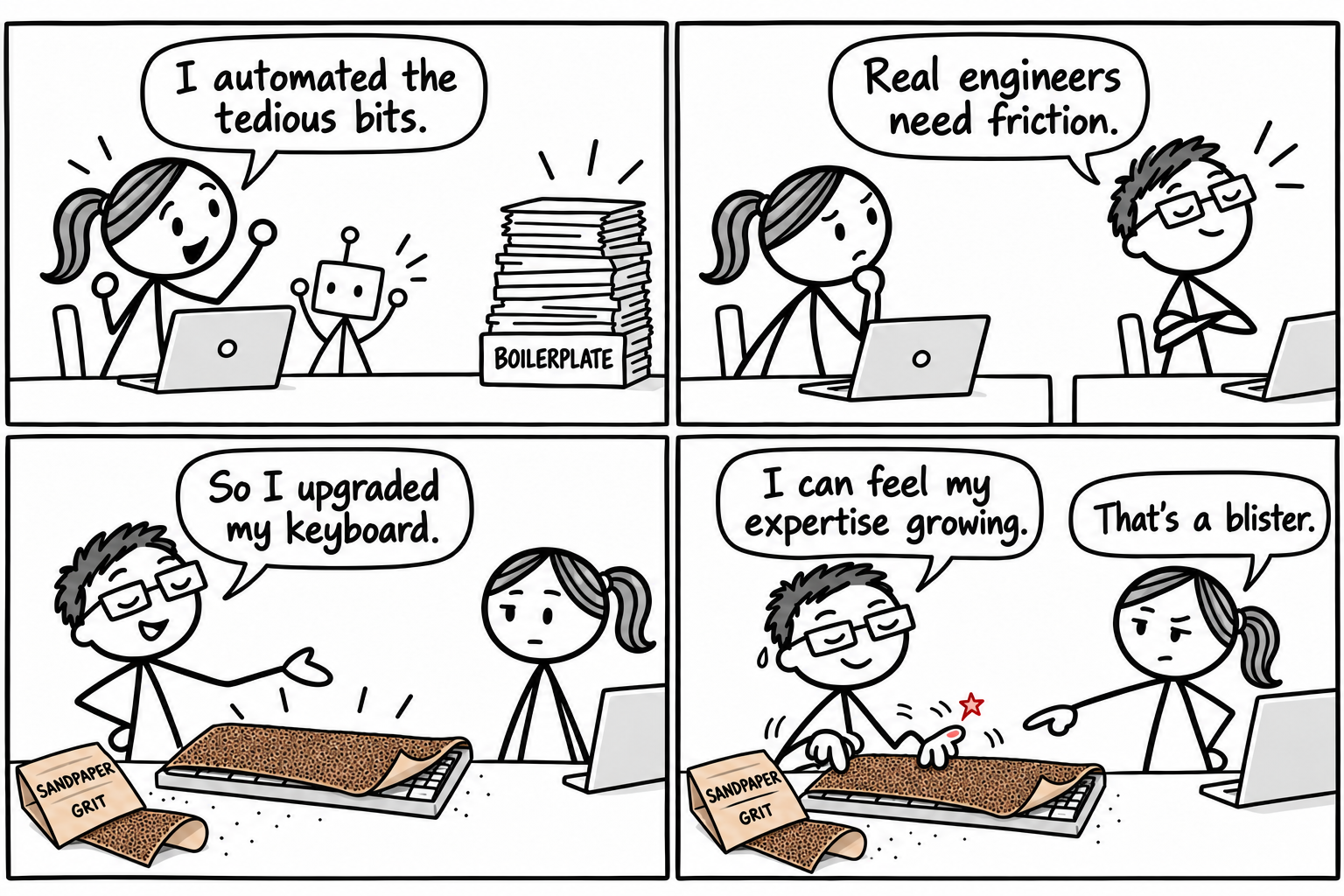
Difficulty is not expertise
Some anti-AI engineers have started treating the willingness to do things manually as a measure of intellectual seriousness. I find that genuinely strange in a field whose entire history is built on abstraction and automation.
We’ve spent decades eliminating tedious work and making software development more accessible. There’s something ironic about suddenly romanticizing the friction we’ve spent our careers trying to remove, especially when it becomes a marker of intellectual superiority.
I understand the satisfaction of programming as a craft, and there’s plenty of legitimate criticism of today’s coding agents (I wouldn’t be building Nuanced Canvas if I didn’t have many myself). But I think there’s also a degree of hubris in assuming that refusing to use new tools makes you a better engineer.
I studied AI across two degrees long before LLMs became consumer products. When I argue for preserving intellectual friction, I’m arguing for being thoughtful about what we automate, not resisting automation itself.
I’m genuinely excited that AI is dismantling some of the busywork and gatekeeping in software engineering. Expertise shouldn’t be defined by how much unnecessary complexity you’ve learned to tolerate.
The friction worth preserving is the kind that develops judgment, not the kind that makes competence harder to acquire.